
Various Travel Experiences: Nepal and EBC Trek

Koans and Background
In the last blog of this series, I discussed the themes of simplicity (Kanso) and mystery (Yugen) in Colombia and Mexico respectively. Kanso and Yugen are Japanese Zen concepts of creating balance and harmony in life. The world is mysterious and complicated with all cultures and nuanced human traditions. Yet, at the core of it lies a beautiful simplicity that highlights the interconnectedness of all beings and things in the world. Zen monks often use koans (puzzles) to reduce bias and increase openness to the unknown. The answer is not important, and even impossible at times; what matters more is the process of deduction and presence.
Irrespective of how smart or capable one is, their own ego and thinking minds get in their way of solving these puzzles. The key lies in silence and equanimity born out of pure wisdom through experiences. Textbooks won't give an answer, nor will a youtube video or some esteemed monk in the Himalayas. The answer only comes from intuition born out of cumulative experience. This is why I love to reflect on my travel experiences. All experiences have wisdom in them, but traveling to new areas promotes a new sense of curiosity and awe and further establishes a new outlook towards life. These themes of presence, patience and humility will reappear in this blog as I discuss my travels abroad in India and Nepal, two subregions of Southeast Asia.
In this blog, I will discuss the theme of humility in the context of my trip to Nepal and the Everest Base Camp Trek. I will expand on how I felt while walking through the 90-mile (140 km) long, 5,300 m (17,388 ft) high, treacherous terrain of Everest Base Camp in the vast Himalayas. From gigantic mountains and suspended bridges to small villages and local peppermint tea : all of it was worth the experience
Nepal Travel
I visited Nepal in the summer of 2024, following my graduation at Wayne State University in B.S. Honors Neuroscience. I had been planning to visit Nepal for a long time since it is the birth land of the Buddha. Being a devout meditator and Zen practitioner for more than 4 years now, I wanted to explore original Buddhist temples and embrace Nepali culture. While researching Nepal, I stumbled on Mt. Everest Base Camp (EBC) Trek. Clearly, this was a once in a lifetime trek, and as a young man in my early 20s I was really inclined to take the challenge and make this a solo spiritual trip. With no second thought, I signed up with Sherpa Expedition and Trekking travel agency for the 13 day EBC trek at the end of May 2024. I usually travel light, so when I flew from the United States, I only had a suitcase with 8-10 pairs of clothes and a backpack with basic hygiene items, coat/hat/gloves and electronics. I had planned to stay in Nepal for 15 days, and then visit my family in India for the next 2 weeks, totaling the trip to a month.
On the flight to Nepal, I stumbled upon the movie, Everest, from 2015, showcasing Jake Gyllenhaal. This was a perfect watch to geek myself out and get ready for my expedition. When I landed at Kathmandu, the capital of Nepal, I was greeted by a large statue of the Buddha with a sign saying 'Nepal: The Birthplace of Lord Buddha.' Calmly, I carried my luggage from the conveyor belt and met my travel agency at the arrivals exit. My flight had arrived during the night, so I was able to see the night life of Kathmandu. I made some new local friends from the hotel's restaurant and they took me to a night club. I personally didn't drink or dance much, as I felt slightly inappropriate to do so in the birthplace of the Buddha. But I did enjoy local music and appreciated people dancing in happiness. The drinking part: not so much.


The next day, I met my travel guide and sherpa, who is a professional mountaineer capable of carrying large luggage at high altitudes for long periods of time. They gave me my hiking gear (see pictures below), which mainly included a dufflebag that the sherpa carried for me, two hiking sticks, a free shirt, a water bottle, and a thick jacket. Usually, people would fly from Kathmandu to Lukla (covered by travel agencies) to start their trek. Strangely, my flight had some issues, so they arranged a private helicopter for me and 4 more hikers. Guess I just got lucky. On my ride to Lukla, I had my first view of Mt. Everest- and god damn was she gorgeous! The sherpa told me this trip was a symbol of mental strength, but more importantly it was a moment of self reflection: to see beauty in nature is to be beautiful yourself!
Everest Base Camp (EBC) Trek!
For the next 7 days, I traveled from Lukla (2850m) to Phakding to Namche Bazar to Khumjung to Tengboche to Pangboche to Dingboche to Lobuche and finally arrived at Gorak Sheep (5140m), the last village before reaching EBC. The trip was planned to take 8 days to climb up in elevation, and 3 days to climb down. We climbed for around 4-5 hours everyday before resting at a local village. Most stops were small villages with a max population of 40-50 people. Namche Bazar was the only large town that had more people and infrastructure. Our trek took us through mainly dry but inclined land. June is summertime in Nepal, so I didn't have to wear a jacket until the very end of the trek. On the way, we saw 'yak,' a special breed of cows, and many stray donkeys and horses. Words can't explain how free it felt to be out in the wild. I was surrounded by trees, mountains, rivers and bright skies. The sun was bright, and fatigue was the name of the game through the trek. But the cheat code was in breathing. I realized this mid way through my journey as I was gasping for air with lower oxygen at higher altitudes. Having a synchronized breathing to walking pattern as well as taking large, deep breaths helped maintain the pace and ease the trek. My pace was 1 long breath in for 4 steps, and 1 long breath out for 5 steps. Eventually I got in a flow state where my breathing naturally carried me up the mountains. Then again I am 5'7 130 pounds, so it may not be as easy for bigger people. ;p
Though my goal was to reach Mt. Everest, I saw several other Himalayan mountains on the way up to EBC. These are named in Tibetan with their reference to Mt. Everest. For example, Changtse is the north peak since it is north of Mt. Everest. Other mountains include:

Mt. Ama-Doblam (double mother)
Mt. Kangtega (snow saddle)
Mt. Kongde (Steep cliff)
Mt. Thamserku (Animal peak)
Mt. Nuptse (west peak)
Mt. Lhotse (south peak)
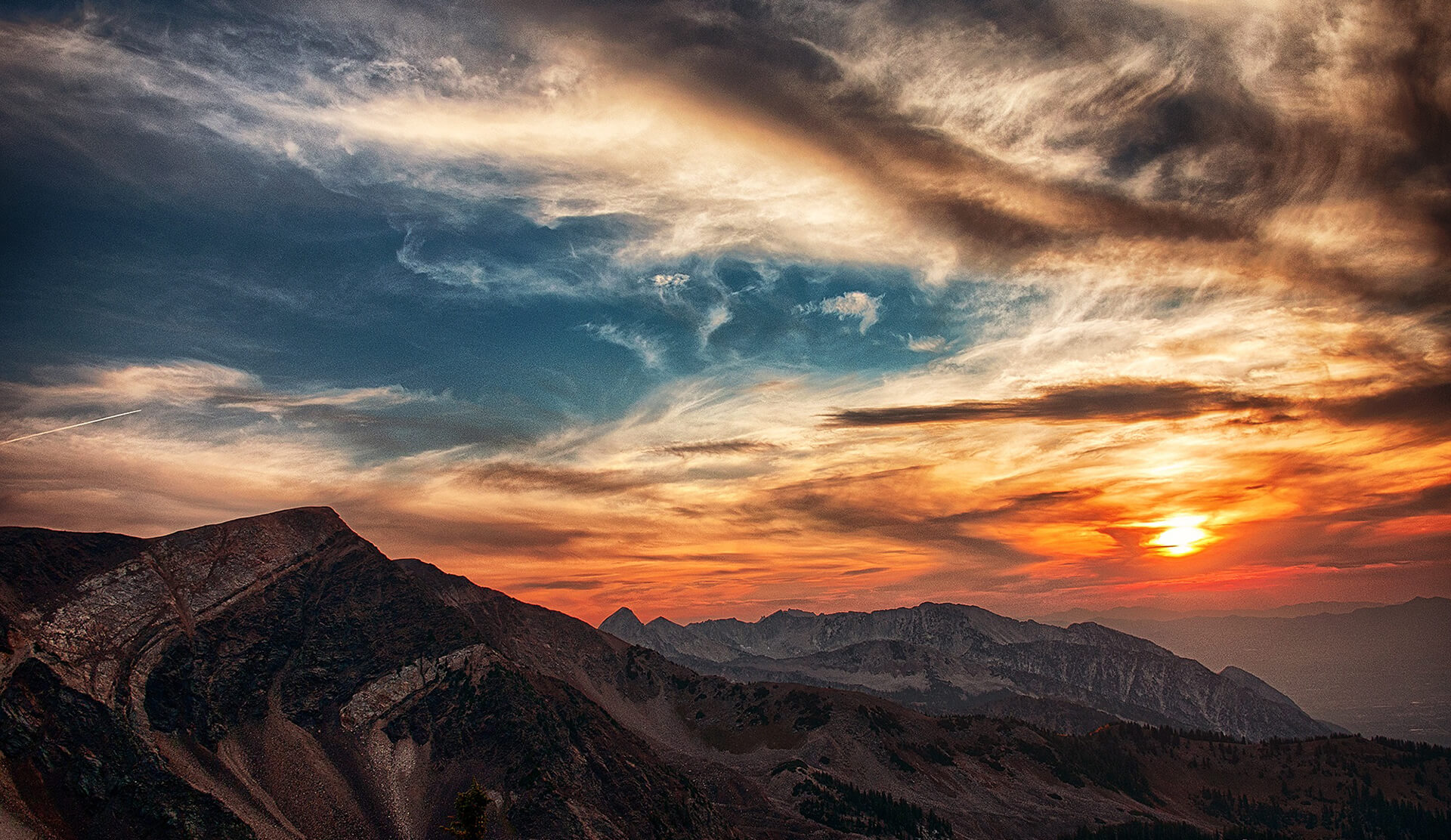
These mountains have little to none vegetation or living conditions on them. Nonetheless, their grandiosity reminds us that life and death are equally important in this universe. Each mountain almost felt like a spirit to me: it spoke through it its shape, its creeks and valleys. It married the rivers like Dudhkoshi and glaciers like Khumbu. In its own majesty, the mountain reminded me to be humble. We think of ourselves as the center of the world, but witnessing this grandeur and open landscape of the Himalayas opened my eyes to my own insignificance. The world is beyond beautiful and vast beyond imagination, and the human mind can only get so close to understanding it. When we surrender our tendencies, beliefs and thought patterns, we can start to expand ourselves into something bigger than ourselves.

On Day 7, I came upon my biggest challenge in the journey: Nagarjuna Peak. Right before we reached EBC, the trekkers had an option to climb a very difficult hill with almost 80 degrees incline to reach a spot with a 360 degree view of Himalayas and Mt. Everest. The views are immaculate and beyond comprehension from the top of Nagarjuna Peak. The caveat is that you have to endure 2 hours worth of extreme trekking. And… you know me, I love challenges and pushing myself so I did it. :) To be honest, it was difficult, and I remember myself praying for my life midway through the hike. I wanted nothing but to get to the top: my eyes couldn't process the beauty around me, my ears couldn't hear anything but my own voice of prayer. I sung the mantra of 'Om Mani Padme Hum' and 'Buddham Saranam Gatchami' again and again to distract myself from pain. The trek until Day 7 was difficult, but I was able to use breathing strategies and walking sticks to get across. But Nagarjuna Peak on Day 7 required another level of dedication. No strategy helped, no mantra eased my mind, I just had to climb numbing myself. I had brought water and snacks, but I didn't have the energy to eat anything either. I remember at one point, I thought my body didn't belong to me: it sort of just moved on its own. Sort of a creepy experience, but one that is vivid and memorable. Ultimately, I reached the top: lo and behold what I saw was nothing sort of heaven.
You see, if the climb was easy, I wouldn't have enjoyed the peak as much as I did in exhaustion. Ultimate satisfaction. I took a breather, and just sat on a rock gazing at absolute beauty around me. I did the typical tourist shenanigans of taking photos and videos, and selfies, etc. And then I sat in meditation. I won't speak to the quality of my meditation, as it is beyond words, but I will say one thing:
There is nothing more real than the presence of God.
Climbing down the peak was a piece of cake. Some struggled with balance, but I felt pretty stable after my meditation. I was able to enjoy the scenery more while coming down as I wasn't worried about dying and falling off the peak like I was on the way up. When I came down to my small dormitory in Gorak Sheep, I felt sick to my stomach. I had light headedness, vertigo, nausea, severe headache, ringing in ears, and blurry vision. By this time of the trek, we were close to Mt. Everest, and the temperatures had also gotten severe. It was chilly all evening, and I turned and twisted in my bed non stop. Unable to fall asleep, I went to the lobby and sat in front of some heated woods with some locals. They didn't speak English and barely understood Hindi (India's language). I took some ginger tea, ate some soup and noodles and then just watched the woods burn. The day was blurry and my sickness had taken away all my thinking faculties. I called my parents and they consoled me for a while. The next day, Day 8, was the last climb of the trek: reaching EBC. I was half sick with pretty bad headaches. To this day, I have a blurry memory of what happened that day or how I even got to the base camp. But I managed through the pain and ended up on EBC. On the way, I saw a beautiful glacier, Khumbu, and by the time I reached EBC, it was all foggy so unfortunately I didn't even get to see Mt. Everest from the base. I was able to see it later that evening once I reached back to the hotel.
I was pretty sick even after coming back from EBC. And guess what: job was not done yet! I still had 3 days of trekking to get back down to Lukla where I would take the flight back to Kathmandu and reach my travel agency's hotel. In my sick state, I was advised to call in an emergency helicopter and be admitted to the hospital in Kathmandu. The rest of the story is boring: I get admitted, diagnosed with edema and stomach infection, put on IV and saline, and then eventually discharged with antibiotics. Given that I took the helicopter, and did not trek the last 3 days, I actually had extra time in Kathmandu to explore before flying to India. I took this time to write in my diary, meet up with my local friends, and do some souvenir shopping. I visited one of the largest Shiva temples, Pashupathinath, and witnessed a cremation (burning of dead body). I was reminded that one moment's flesh and bones are another moment's ash and dust in the air. Mindfully, I walked back and meditated on the hour of death.

Summary
All in all, the EBC trek was the most adventurous thing I have ever done in my life. I wasn't in a group; all I had was my guide and sherpa. So instead of getting caught up in idle chatter and drama, I was truly able to be present to the natural beauty around me. I lived in small huts, I also lived in large dorms, I ate savory momos and nepali curry while also finding bugs in my noodles. I sweated profusely for half the trip while also shivering sickly during the other half. I felt blissed out flow states while also experiencing near death experiences. I gained many memories and lessons, while losing unnecessary negative parts of me. I experienced it all: the good, bad, the ugly… This trip exposed me to all 8 vicissitudes of life (praise and blame, gain and loss, fame and disrepute, and pleasure and pain). In the end, I realized that the greatest of joys lies in remaining equanimous and compassionate. To be serene amidst chaos, to push boundaries, and to put a smile on the people around you. My hope is to travel to Mt. Everest once again, but with a loved one in the future. I hope to give and enhance the same experience I had to a significant other or a group of friends. My next blog will cover my trip to India. Whereas Nepal was more of a freedom enhancing solo trip, India was a hectic patience testing family trip. More to come in the next one.